Deep Ripping
Services
Build better ground from the bottom up — Cat D8 ripping to a full 60 inches for new orchard development and soil prep
Healthy orchards start below the surface. If your soil is compacted, layered, or has never been properly prepared, your trees will struggle with shallow root systems, poor drainage, and reduced nutrient uptake for their entire life. Custom Farm Services provides professional deep ripping with heavy Caterpillar equipment, fracturing and loosening soil down to 60 inches so your next planting gets the strongest possible start.
Why Deep Ripping Matters
Compacted soil is one of the biggest limiting factors in Central Valley agriculture. Hardpan layers, plow pans, clay lenses, and naturally dense subsoil restrict root growth and water movement. Deep ripping breaks through these restrictive layers, creating a loose, well-drained root zone your trees can fully exploit:
When to Deep Rip
Deep ripping pays off at several key points in the orchard lifecycle:
Pre-Plant Orchard Preparation
Ripping before planting a new orchard is one of the highest-return investments you can make. Trees planted into properly ripped ground establish faster, grow more vigorously, and reach full production sooner.
First-Time Farm Ground
Converting rangeland, fallow ground, or other non-farmed acreage into productive orchard land almost always requires deep ripping to fracture native hardpan and compacted layers.
Orchard Replanting
After removing an old orchard, ripping the ground before replanting resets the soil profile, correcting compaction and structure issues left by years of equipment traffic and irrigation.
Compaction Remediation
Even established operations benefit when drainage problems, stunted growth, or poor water penetration point to subsurface compaction that needs to be fractured.
Our Process
A proven, ground-up approach from evaluation to finished field:
Site Evaluation
We visit your property to assess soil type, hardpan depth, moisture, and acreage, then recommend the right depth and pattern for your ground.
Timing the Job
Ripping works best when soil has some moisture but is not saturated. We schedule the work for conditions that let the profile shatter and fracture properly.
Deep Ripping
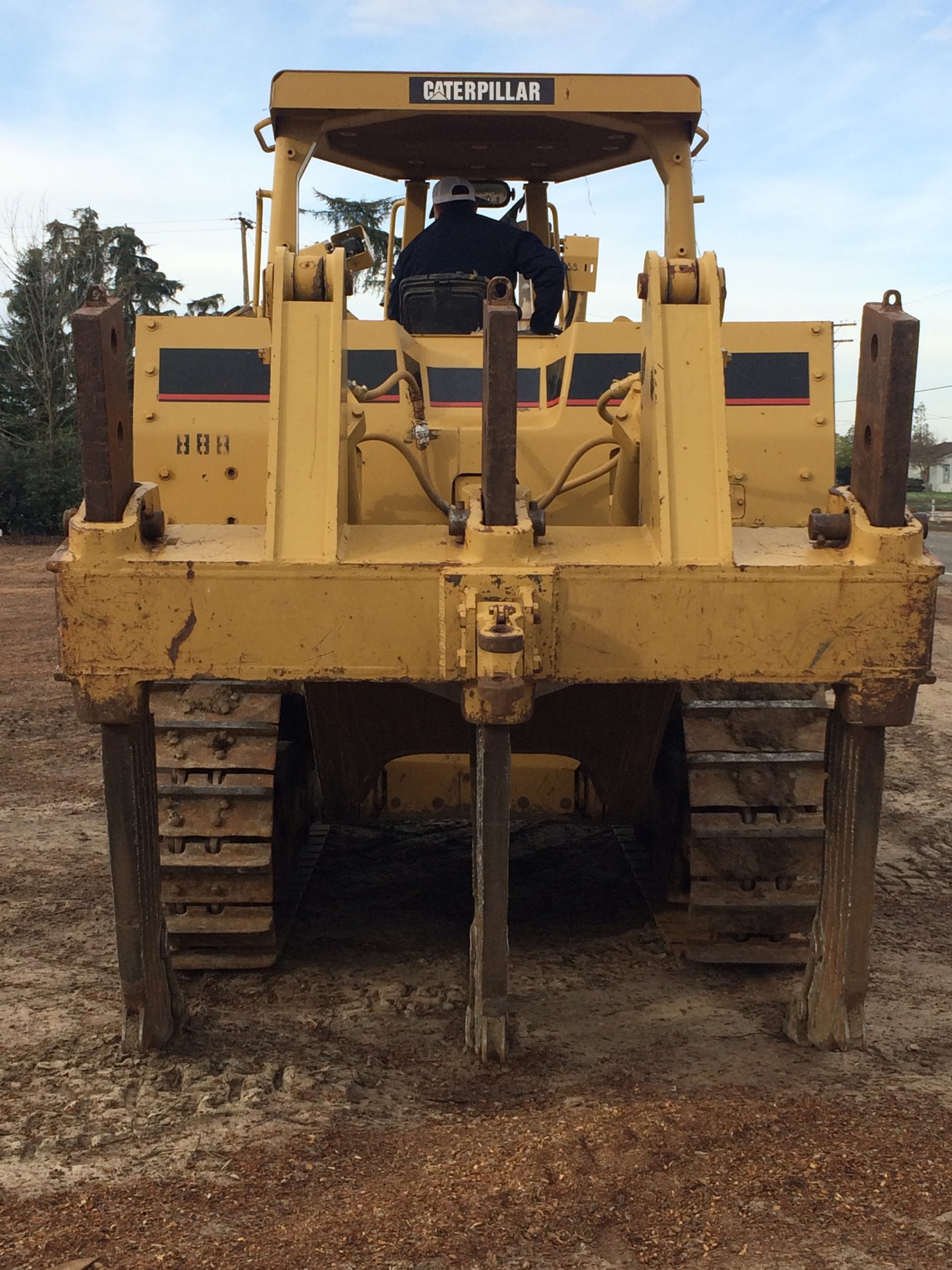
Cat D8R and D8H dozers pull deep ripping shanks to a full 60 inches, fracturing hardpan, mixing horizons, and opening pathways for water and roots.
Cross-Ripping
For pre-plant preparation we typically run a cross-rip pattern — two passes at right angles — for thorough fracturing across the whole profile.
Ready to Plant
We leave the field loosened and well-drained, set up for the next step — spreading, leveling, and planting your new orchard.
Our Equipment
Caterpillar D8R and D8H
We run Cat D8R and D8H dozers equipped with deep ripping shanks. These are not small tractors with bolt-on rippers — this is heavy iron purpose-built for fracturing dense, compacted soil at serious depth.
Ripping Depth: Up to 60 Inches
Our equipment rips to a full 60 inches (5 feet) of depth — well beyond what most tractor-mounted rippers can reach — ensuring even deep hardpan layers and clay lenses are fractured and loosened.
Experienced Operators
Our team knows Central Valley soil types and adjusts technique based on what they encounter in the ground — depth, pattern, and pace are dialed in to the soil, not just the machine.
Pre-Plant Specialists
We understand what orchards need below the surface because we have been working in these orchards for decades — removal, ripping, spreading, and ground prep all under one roof.
The CFS Difference
Not all ripping is created equal. The depth, pattern, and equipment used make a significant difference in the results you get:
True 60-Inch Depth
Many services cannot reach this depth. We can — delivering real deep ripping, not shallow scratching that leaves restrictive layers intact below.
Cat D8-Class Equipment
The horsepower and weight to fracture the toughest Central Valley soils — heavy iron built for the job, backed by decades of orchard experience.
4th-Generation Local Knowledge
Established in 1969, we know the hardpan depths, clay layers, and soil types across Merced and Stanislaus counties — and we show up when we say we will.
Request a Free Estimate
Get a no-obligation quote for your deep ripping project. We respond within 24 hours.
Service Area
Deep ripping is offered primarily in Merced and Stanislaus counties. For Madera, San Joaquin, or other areas, contact us — we can make special arrangements depending on project size and scheduling.
Related Services
What Our Clients Say
Trusted by growers across the Central Valley
"Custom Farm Services did an outstanding job removing our old almond orchard. The crew was professional, efficient, and left the field clean and ready for replanting. They handled everything from pushing to grinding and even coordinated the chip hauling. Highly recommend them to any grower in the Valley."
Dante Rojas
Ballico, CA
"We've used Custom Farm Services for three separate orchard removals over the past five years. Each time, they showed up on time, worked quickly, and delivered exactly what they promised. They also helped us navigate the Air District grant paperwork, which saved us a significant amount. These guys know what they're doing."
Kuldip Dola
Livingston, CA
Frequently Asked Questions
Common questions about deep ripping in the Central Valley
How deep do you rip?
When is the best time of year to deep rip?
How many passes do you make?
Do I need to deep rip before replanting an orchard?
Can you rip ground that has never been farmed?
How do I get a quote for deep ripping?
Set Your Next Orchard Up for Success
The work you do below the surface determines what happens above it. Schedule a site visit and discuss your deep ripping project today.